≡ Menu

Journal: No Mole New Moon September 2012

As a new feature on my blog I’ve decided to do a personal or creative post every new and full moon.
In general my blog is focused on book reviews. Occasionally I host a giveaway. In August I hosted my first author guest poster Russell Blake. September’s “Unusual Creatures” series is my first weekly run of guest posters, and I’m loving this so far. These series will be here to stay and so will the reviews.
I love reading, but–have you ever read so much that it doesn’t feel like fun anymore? Six library books due next week, so you just turn them all in unfinished?

I think this little Wren needs a break. So in honor of the new moon, I’m going to talk about the absence of things, things that have disappeared, or things I want to do so. Specifically this month I’m going to talk about moles. That’s right– mole removal. 

Please note: the following dissent is not aimed at medical practitioners, but at the system they are required to work with in.
For the first time in my adult life, I went to the dermatologist this month. By a crazy movement of fate, it turns out I was referred to the same office I visited as an acne ridden teen. 
I long ago had given up on the dermatologist, because taking the recommended courses of antibiotics seemed a very unhealthy long-term solution to me. Never was I offered a different face wash–I use jojoba oil exclusively now, believe it or not–or any other skin care advice beside oral and topical medications. Most of wish dried me into a raisin. I didn’t want any of that crazy Accutane, either, as you have to get regular blood tests.So I stopped going. Nothing seemed to work until I, of my own volition, decided to cut gluten and corn syrup in the last year. My skin is great now…but now I went to the derma for a different reason entirely. My family is very moley, so I had to go back to get checked out.
Honestly, the doctor’s terrifies me. I am recovering needle phobic. Getting acupuncture has helped, and I can withstand a blood drawing as long as I sing to myself, “Lalala, puppies, kitties, puppies.” I’m only part kidding. My biggest fear was that I’d lose my pretty collarbone mole.
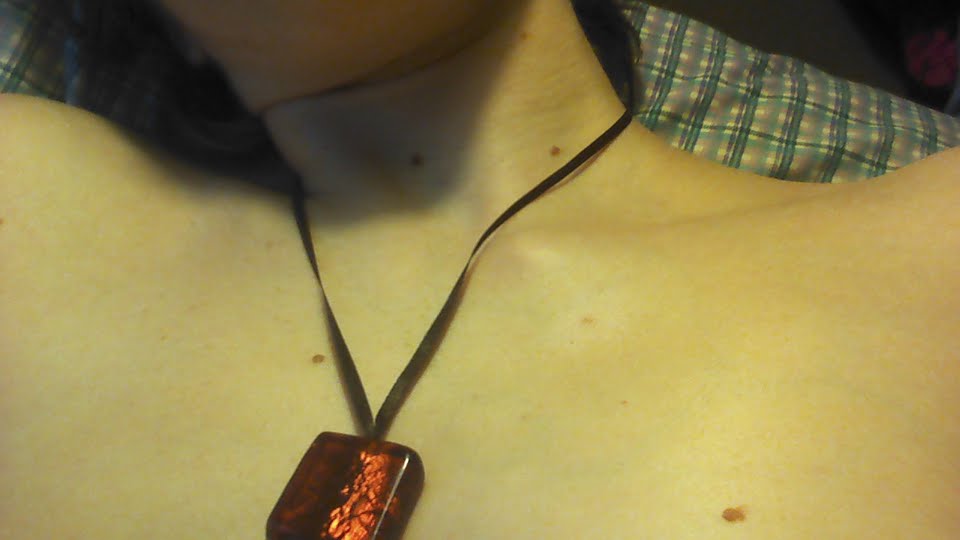
 

Many moles I would’ve cried to lose. These got approved!


I’ll admit it, I hate the doctors. I am a chakra loving, crystal carrying, herb studying, gluten-free eating massage therapist with a BA in Political Science from a women’s college. The accoutrements of Western medicine feel cold, uncaring, and joyless.

I don’t know why complementary medicine hasn’t had more of an effect. Why can’t sheets and walls be in color? I know from personal research that there are only two local options for medical grade linens: white and light beige. My office has red, grey, blue, green, coral, orange and yellow. We even put a different colored pillow case on top.
At my office when someone needs acupuncture needles in the back, they get a clean patterned blouse. At the dermatologist, they told me to take off all my clothes, and put on a crinkly paper dress slit up the back. OK what is the point exactly?

I’ve never been comfy with people seeing me naked. My family frequents nude beaches– in the US and Europe. I, however, don’t want people to see me, to scam on me, to judge me. At the same time, nudity is less humiliating at putting on a stupid paper dress. 

Instead of a nude beach pic (you’re welcome)– preventative sunscreen!


Reasons why a paper dress is more humiliating than nudity:

1. It’s unsustainable and I fear they just toss all the paper away. Mind, it’s a floorlength “gown.”
2. There is a slit all down the back. It’s not a functioning gown, it’s a costume in which to be observed. Like a dunce cap.
3. Once I put it on, I can’t sit in the regular chairs anymore. Now I have to submit to sitting on the generic leathery bench with more paper on it.
4. If someone runs into my room without knocking (which happened), its more embarrassing to catch me midchange with arms half in this madscientist labcoat paper thing. If I could stand proudly naked, it wouldn’t matter.
5. The doctor still looks me over everywhere, but now she or he can look under and around the paper and I never have to see their face. This is supposed to be comforting, but it makes me feel ashamed.
Why can’t I bring a comfy robe from home?? I’ll even put it on backwards. It’s on my question list.
Urg. So the results came back and I am advised to return to chop more moles off. The one from last week is still a reddened pock on my hairline. My skin scars so easily I fear the appearance of red circles all over my body.
But I’ll go, and participate once more in the ring of waiting, humiliation and guilt. I get a painkiller for something so minor while the same is refused to others. I get my mole numbed when my friend was denied painkillers for her abortion. My boyfriend couldn’t get painkillers for his herniated disc due to the neighborhood he lived in.

I think everyone deserves treatment. I think everyone deserves dignity. Rather than being required to upload a heartless protical to appear a legitimate medical practice– the white, the absence of color, art, creativity or personality–why can’t medical offices be a nice place to be? 

Why can’t doctor have more out then a degree and a picture of kids? I do show them my private places, and yet I have no idea who they really are.
I will go back to the doctors, and I will keep going back because I am built to survive. I will go to the ones with the magic pen to take away my pain, my infection, my ability to conceive. But I won’t like it.

“Everyone hates going to the doctors.” Then why can’t anyone do anything about it?

Share Button
{ 4 comments }
Description:

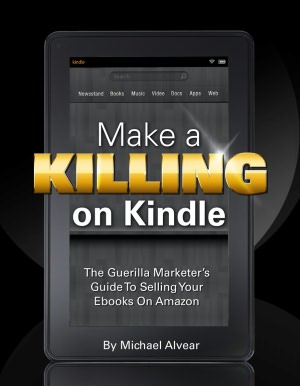
You’re only 18 hours from a potential Best Seller.
 
That’s how long it takes to put all the strategies in this Kindle selling guide to work.
Learn how to:
-Rank in Amazon’s Top 10 Search results Every Time People Look For Books like Yours
-Increase Sales by Making Your Book’s Landing Page Look Like a Million Bucks

-Know How Many Kindle Books You Sold By Looking at Your Sales Rank

Blogging, Facebook & Twitter Are A Complete Waste Of Time

Less than 10% of the U.S. owns a Kindle E-reader. That means over 90% of people who visit your sites can’t buy your ebook because they don’t have anything to read it with! Stick to marketing within Kindle, not outside of it. 

 
Review:

I have to say the title of this book enticed me. While How To Make a Killing on Kindle provided excellent information in several areas, I’m taking some advice with a grain of salt. Here are my impressions:

1. Great nitty gritty information I have not seen elsewhere.

Alvear describes a number of different techniques to improve the placement of ebooks.

Some of these, such as optimizing seo terms in the book description and title, may be useful for sellers across all platform.

While others are specifically geared for Amazon: interpreting sale numbers from rank position, choosing the right categories, and adding formatting to descriptions. And that last one, is a whole lot more complicated than I could’ve imagined.

2. Some techniques are morally ambiguous.

In one chapter Alvear recommends writing book reviews of your competitors with comments like “As the writer of blah blah blah” in the first three lines.

Personally when I see this I find it to be obnoxious.

He also highly recommends everyone acquire five to six reviews. Alvear leaves it up to the readers to as to whether to recruit a friend or to write the reviews themselves.

As a book reviewer I find this to be rather tacky.

While I understand it’s a business and there are surely overlooked books out there, if a book doesn’t naturally provoke good reviews then it needs to go back to the drawing board. There are so many reviewers like myself happy to provide a service.

Writing a review yourself says that the book/cover/description/hook needs work, and that the author needs to build relationships with potential readers. Writing your own reviews is an act of desperation, not a task to complete in hour number ten.

3. I’m unconvinced about ditching the blog.

Alvear says since only 10% of people have an e-reader, any advertisement aimed at the general public will flop.

The thing is e-readers are just starting, but the number of users will continue to grow. Hello, Christmas presents.

Also this advice is specifically aimed at people who will only sell their books online. Personally I plan to offer both digital and print copies. I like the way books weigh in my hands and smell, and ohhh it’s a romance, me and books. In that case the paperbacks will be more expensive to buy, but yes, all blog readers could still enjoy it.

Even if you are e-publishing only, there is a lot to be said for coming off as a real person. Blogs allow people to check you out, decide if they want to listen to your advice, and connect. I love my blog for the friendship element in this cold internet sea.

But yeah I’d probably have another book written if I didn’t blog. Oh well.

4. Moral and philosophy issues aside, most of the content is useful.

Even if a writer refuses a tool for moral reasons, it’s good to be aware that writers out there might do it. This book is an eyeopener to tactics I found to be untraditional.
In order to compete, Kindle authors need to have attractive descriptions, to have books that can be found, and to understand the market. Where they get their reviews is their problem.
Other than those two points of the book– reviews and blogs– everything else is fine. While the search terms explanation will probably be more applicable to nonfiction writers, it’s a really useful book for anyone planning to sell on Kindle.
For five dollars, I’d say this is worth it. 
Share Button
{ 0 comments }

Guest Post: Rosemary Fryth, author of Dark Confluence


First up for the “Unusual Creatures” guest post series this month is Rosemary Fryth!

 
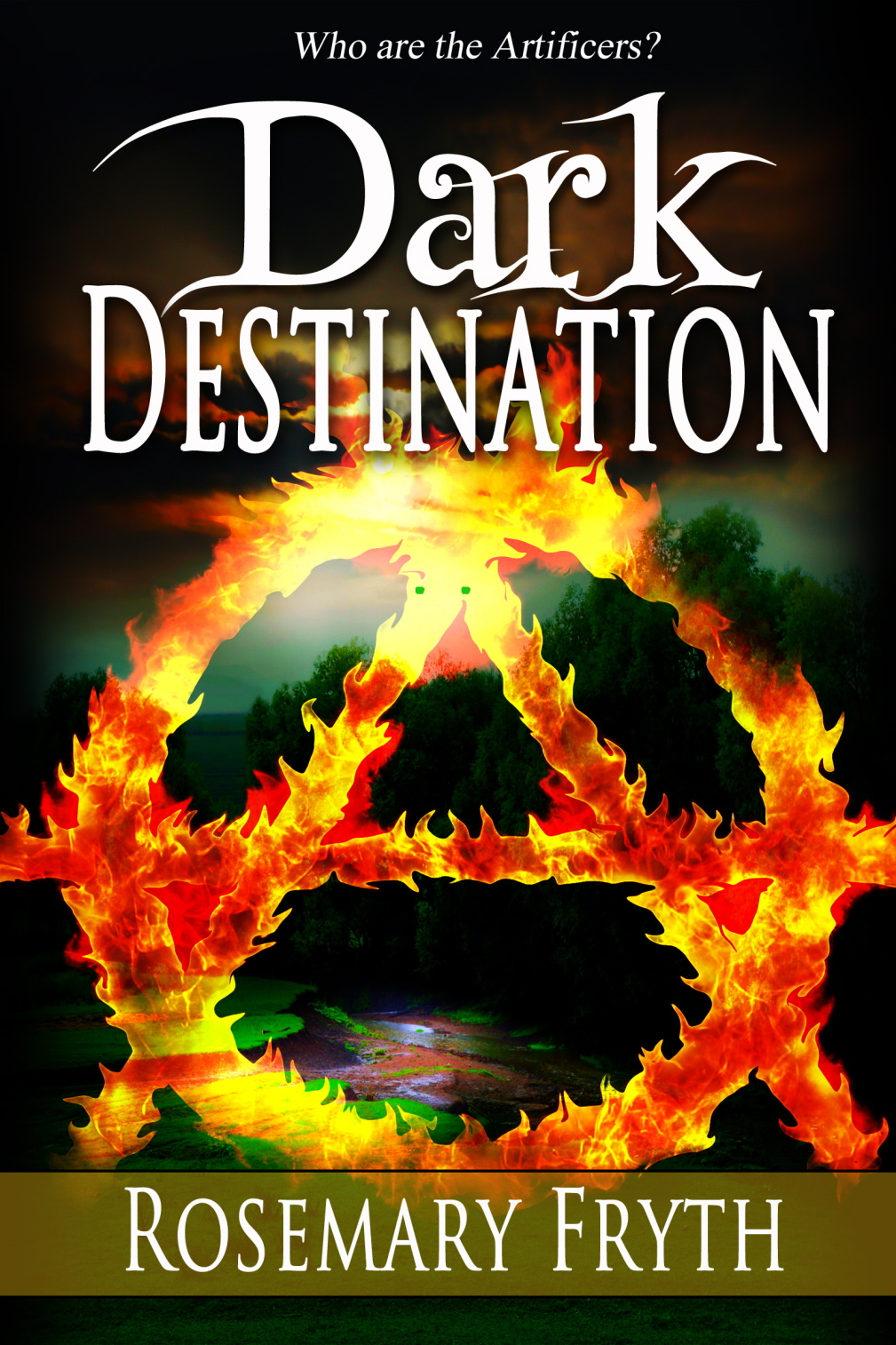
She is the author of Dark Confluence, as well as it’s sequel Dark Destination (soon to be published). Dark Fairies are her specialty.

I have always read fairy stories.

As a young child I grew up with the tales of the Brothers Grimm, of Hans Christian Anderson, and the Australian author May Gibbs, who wrote original Australian children’s fairy stories about the Gumnut Babies, and the big, bad, Banksia Man. As a teenager I read onto Tolkien, Susan Cooper, C.S. Lewis, and Alan Garner.

I was especially influenced by Cooper and Garner, and their stories of creatures and beings from legend and myth interacting with children of a modern Britain.

As an adult I read more of the same: Charles de Lint, Robert Holdstock and Raymond E. Feist were in my opinion, standout authors, who deftly combined myth with the mortal, often mundane world.

The one constant in all the books I read (except for Gibbs), was that they were all set in far-away places like Great Britain, the USA, and Canada.

Very few children’s fairy stories (and almost no adult ones) were set here in Australia, and I keenly felt the need to right that wrong, and to bring creatures of Celtic and European myth, DownUnder.

Although I loved all these books, I yearned to write my own stories, and earlier this year I did, starting a new trilogy called ‘The Darkening’. The first book, ‘Dark Confluence’ is all about the faeries (The Fae) besieging the small Australian town of Emerald Hills.

 I set my stories locally here in Queensland, in a cool and green location on the beautiful Sunshine Coast Hinterland, a region that I knew well from camping and day trips, and attending folk festivals.

My stories weren’t just about fairies, my stories also had a thread of darkness, a hint of horror – because I believed that fairies weren’t always the cute and winged variety perched on flower or under mushrooms.

My fairies were cold, conniving, political, and calculating. They used humans and humanity as pawns to further their own ends and agendas. If someone or something crossed them, they were cruelly vengeful. On the other hand, they handsomely rewarded self-sacrifice, and oft loved the mortals they manipulated.

My first book, which has an unusual heroine, is also an adult fable about Australian society, and politics in this country. It was written as my own ‘Pilgrim’s Progress’ with a hidden second story.

I have left little hints and clues throughout ‘Dark Confluence’, a story that can be read simply as a contemporary dark fantasy, or delved deeper for an underlying commentary on modern day Australia.

My choice of a late-middle aged spinster as my heroine for the first book of ‘The Darkening’ trilogy was deliberate too. So many stories feature teenage heroines, and although I enjoyed reading those stories, as an adult and mature woman I could not identify nor relate to a heroine thirty years my junior.

So I thought I’d break the mould, create a heroine who was small, neat, in her early fifties, unmarried and a spinster – a heroine who was overlooked by life, men and society.

Readers have commented to me on how much they loved Jen McDonald, they see her as ‘brave’, ‘compassionate’, ‘selfless’, ‘vulnerable’ and how they ‘felt immediately drawn to her’. I wanted Jen to be a real woman, the sort of woman we could all relate to if our own lives had gone on a slightly different, and lonelier path.

The second book ‘Dark Destination’ will soon be published, and deals with the ongoing story of the town of Emerald Hills, of Jen, and my new heroine, Fiona Delany – a moral, yet interesting and unusual young woman of twenty-two.

Into the story of ‘Dark Destination’ I have woven romance, as well as horror and darkness, although in this book the darkness comes courtesy of a rather nasty international cult called the ‘Artificers’ – a cult that I touched on briefly in the first book ‘Dark Confluence’. Paranormal elements are present in ‘Dark Destination’ although the main story is about Fiona and her dealings with the cult.

‘Dark Confluence’ is available for Kindle through Amazon, and is also available for Barnes and Noble Nook. ‘Dark Confluence’ will be soon available on other eBook platforms via Smashwords.

Information on the series (and my other published books) can be found on my website at:
Or the eBooks can be purchased directly from the following links below:
Next up is this series:

Monday September 17 

EJ Stevens author of Shadow Sight and the Spirit Guide novels

Monday September 24 

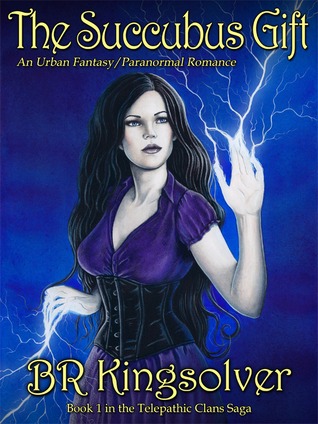
BR Kingsolver author of The Succubus Gift
Share Button
{ 3 comments }

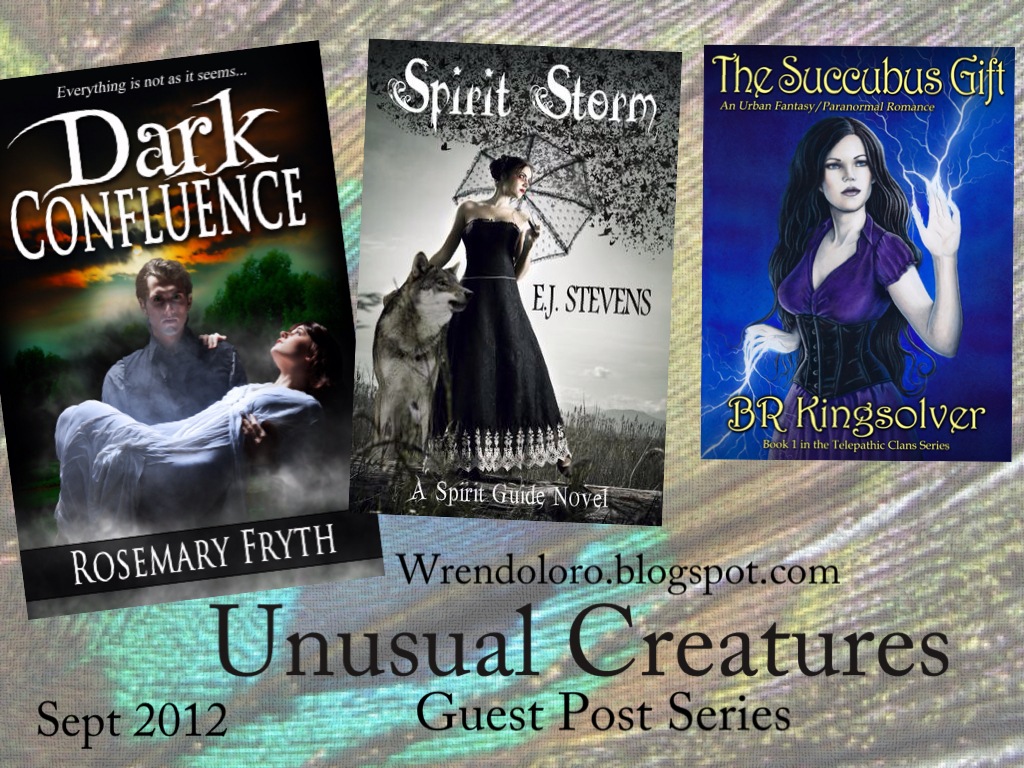
Hello everyone! This week commences the “Unusual Creatures” guest post series this September.

There sure are a lot of vampires out there. Not that it’s a bad thing, it’s just, well, I get a little bored. I just love it when I come across new ideas. It makes me wonder, “Now how did they come up with that?”

Visiting authors will discuss the inspiration for the unusual creatures in their books.

Monday September 10 

 Rosemary Fryth, author of Dark Confluence

Monday September 17 

EJ Stevens author of Shadow Sight and the Spirit Guide novels

Monday September 24 

BR Kingsolver author of The Succubus Gift
Share Button
{ 0 comments }
 
Description:
 
A recipient of the Alva Englund Fellowship and the Maurice Prize for Fiction, Melanie Thorne penned this tender debut brimming with evocative prose. At 14, Elizabeth Reid is searching for a place she and her sister Jaime can call home. Neglected by a father with more vices than work ethic and ignored by a mother bent on starting a new life with an ex-con, Liz bounces between distant relatives in California and Utah. But before Liz can find peace, she must come to terms with the ugly deal she struck to ensure Jaime’s safety – one that has a hold on them both.


Review:

1. This book follows in fine tradition of literary survivor fiction.

There is something fascinating about literary fiction focused on troubled homes. It’s kindof like a trainwreck–much is constantly at stake for the main character, they make mistakes, and I can’t stop watching. White Oleander by Janet Fitch and Bastard Out of Carolina are not only compelling examples of this genre, but also of great writing. 


Like those two books, Hand me Down is about a young girl Liz in a bad family situation. Her father is an alcoholic that their mother has finally freed herself from. But now her new husband Terrance is out of jail. Terrance’s  record as a sex offender means that Liz and her sister Jamie cannot live in their mom’s house. Why will they end up? Nobody knows.

2. Liz is a strong and admirable character.

Because Liz is an older sister, she is especially watchful and careful. So much though that no one else seems to believe her caution is necessary. It’s an attitude problem that makes her dislike Terrance, she’s a stick in the mud for not living with her drunkard father, she’s overprotective for admonishing her little sis for smoking.

But the girl has balls and actually does speak her mind in this book. In a traumatic environment, this is not easy to do. While the adults close to her seem to forget their responsibilities, Liz stands for herself but mostly for her sister.

The other characters also are real and vivid.

3. This book is a great example that trauma can occur without direct abuse.

*spoiler*

Thankfully there is no rape or violence on Liz or Jamie in this book. They end up OK thanks to Liz. 


But that doesn’t mean that Liz’s constant state of upset and fear were not legitimate. 


4. Liz is a poet.


Just like Astrid from White Oleander, the main character from Hand Me Down sees the world in a unique light. Unable to trust the present or her present home, she keeps to herself. She’s sensitive, thoughtful and full of unspoken observations.


I enjoy characters such as these because they think a bit like me. Even in a world of darkness there are beautiful moments that you can churn over and over in your mind.

5. Excellent narration for the book on tape.

Definitely a nice car ride read– it got me to stick around in the car when I arrived home. That’s a great sign. The different character voices were well done.

Share Button
{ 0 comments }

Description:
 
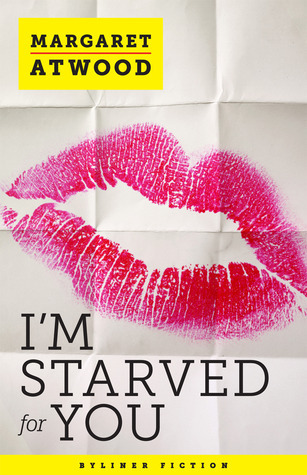
Margaret Atwood follows up “I’m Starved for You” with another novella, to be part of her “Positron” series. The description and review may contain *spoilers.*
 
In this second, steamy episode of the new Byliner Serial “Positron,” the Booker Prize–winning Margaret Atwood picks up where she left off in her dystopian dark comedy, mining wholly deviant territory where a totalitarian state collides with the chaos of human desire.

“As seamless as a stocking, and shockingly believable” is how the “Globe and Mail” describes “I’m Starved for You,” the first installment of “Positron.” In this new episode, the stocking comes off, with husband and wife Stan and Charmaine facing more troubles in safe but carefully controlled Consilience, a social experiment in which the lawful are locked up and, beyond the gates, criminals roam the wasteland that is the America of Margaret Atwood’s creepily plausible near future.

Stan understands the Faustian deal he and his wife have made. What he doesn’t anticipate is the stupefying boredom. What wakes him? An illicit lover’s note written by a mysterious woman who also lives in Consilience. Breaking the rules, he stalks her and is delivered not into the arms of the nympho of his dreams but into a nightmare of mind games and some very kinky forced labor.

In the world of “Choke Collar,” when you surrender your civil liberties, you enter a funhouse of someone else’s making. Stay tuned as the episodes of Atwood’s futuristic thriller “Positron” are released, and discover if anyone can overcome the greatest treachery of all—human nature.

 
Review:

Yes! Another Atwood novella! I started noshing on this as soon as it came out. Here are my thoughts:
 
1. This book is actually better than the first book and chuck full of Atwood staples.
 
Perhaps Atwood was simply testing the waters with the first episode “I’m Starved for You.” Now her writing is honed. She masterfully ties together the threads from “Starved” into new themes in the second book. Atwood makes it seem effortless.
 
These themes include power in gender roles, the corruption of authority, sex as weapon, and the futility of being a good girl. 

2. More books mean more twists.

Atwood builds upon the characters from “I’m Starved” by revealing new sides. She also builds upon the setting by adding new intrigue, new threats, and new challenges.
 
I didn’t forsee any of this. Especially not the kinky sex scenes, oh my! Poor Stan.
 
3. These novellas are potent and easy to read.
 
The Handmaid’s Tale is a short and sweet classic. Readers who loved it may have trouble finishing some of Margaret Atwood’s longer novels such as Cat’s Eye or Alias Grace.
 
The Positron Series would be an excellent follow up read to The Handmaid’s Tale. It’s very accessible. 
 
Well, as long as you are ok with the aforementioned weird sex. You don’t have to like it– Stan didn’t.
 
4. Margaret Atwood is a genius to serialize short stories this way.
 
For the present, most people desire longer ebooks than shorter. But if great writers like Atwood use the form to showcase their page turning scenes, maybe readers will get hooked. I’m sure all writers would be grateful to wean readers off of full length books for .99 cents or less.
 
Personally I was happy to drop $2.99 the day “Choke Collar” came out, and will most certainly buy the next episode. If more of my favorite writers started to offer stories this way, I bet I would eat them up. And I’d feel fully satisfied. I’d pay more for frequent installments that I can easily read in my busy life. (George R R Martin? please? your books are so long and infrequent.)
 
Highly recommended!
 
See it on Amazon

If you liked this, you may also enjoy:


Margaret Atwood offers four free poems on Wattpad

http://wrendoloro.blogspot.com/2012/05/speculative-fiction-im-starved-for-you.html

Share Button
{ 0 comments }

Journal: Healing Blue Full Moon 2012

This week has been incredible. Correction: the past month has been incredible, but this week I have truly begun to heal.

I have spent most of the month on vacation. This week I returned to work. It wasn’t easy to give up the feeling of endless time. Especially the space to write, create, read, study – my passions.

That first day in the office almost made me think I couldn’t go back. I clocked eleven hours managing my wellness office. But I made it through.

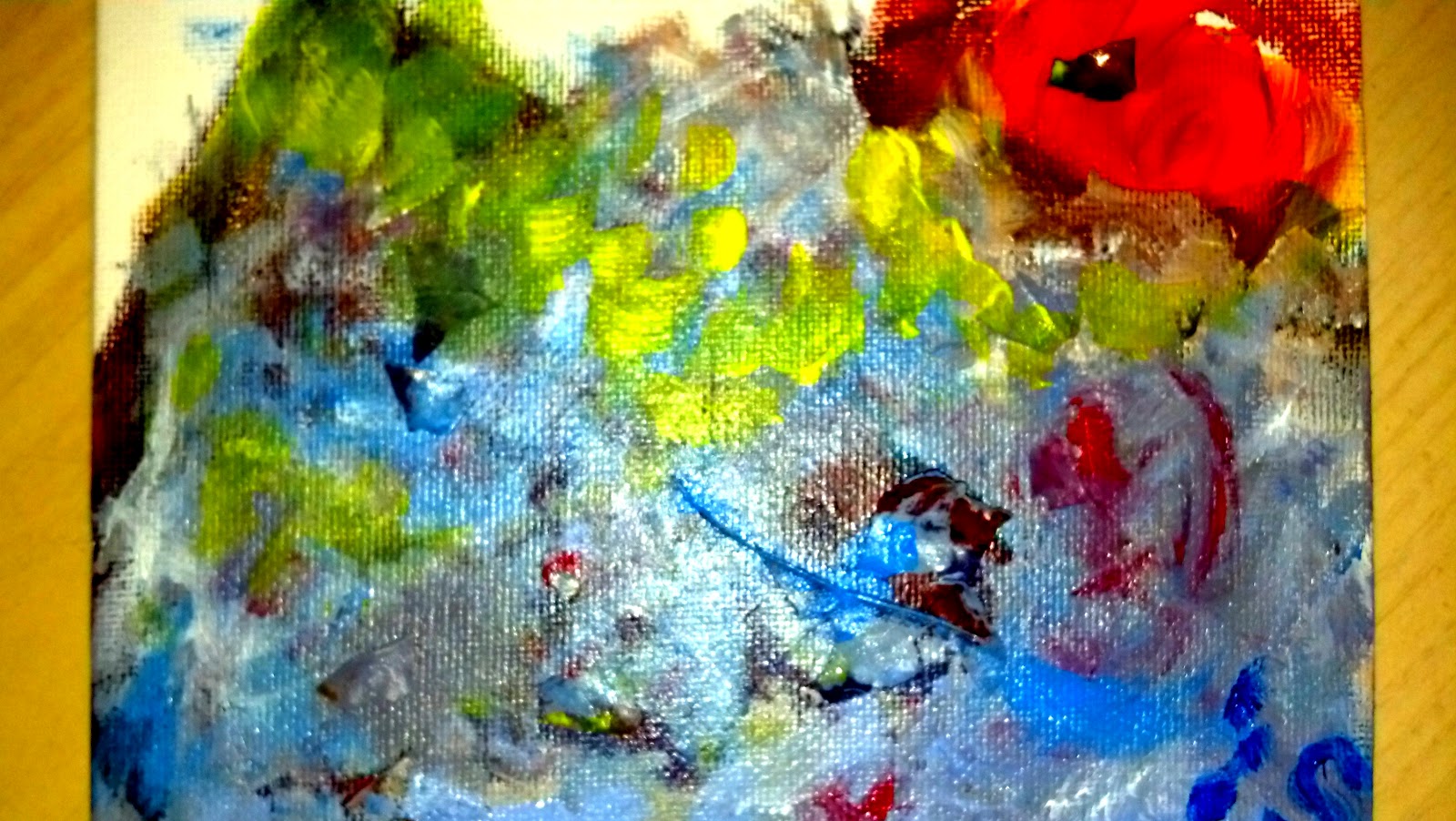
After work, I relaxed by beginning a Creative Goddess course by Leonie Dawson. She began with a meditation to accept those scary parts of ourselves we fear others will see. I took a walk, and used leaves I found to paint the above picture.

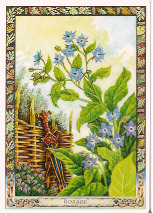
The second day, I pulled a card from The Druid Plant Oracle before work. I drew Reversed Borage. (Imagine the below picture upside down or less positive in outlook.)
Borage told me that sometimes we need to hold our tongue and accept that the present situation, although difficult, may be good for us.
That day I struck up conversations with many long term clients. And that put me in a really good mood. I absolutely love to segue from small talk and really get to know people.

Suddenly, I rediscovered why I work, and why I care about my work.

My life’s purpose is to connect.

Just that understanding has caused so much healing in me. The beautiful aspect of my job is that I connect with people all over the place, and I’m good at it. And I realized this goal carries over to my writing as well. The point for me is not fame or fortune. The point is connection with like minded readers, or as John Locke puts it “the cool people.”
And like Leonie’s meditation, soul healing is a connection with the selves we have shunned. That dark and scary process of daring to be original, weird, sad, angry, opinionated, etc.
I’m still figuring out who exactly the cool people are, but I have already found some—my women’s group for instance. Usually we meet at every full moon to celebrate an archetype.
For the blue moon we focused on Chocolate. It was no joke. We made chocolate sculptures and I won a Hershey’s candle. I left FULL. On my way home I sang songs about chocolate and recorded one on a voicemail to myself.
For me I think stepping out of the distance I use to protect myself is essential to my healing. Being silly, creative and vulnerable is essential. I need to connect to others, to unconditionally love myself and my work, forgive the mistakes and give myself permission to make them. I need to connect myself to hope and love in the midst of discipline and preparation. I need to connect every potential of myself I have, the shards of my personality I have put aside in fear.

Healing is a process, but it’s happening. I’ve never felt better.

—
How has this summer help you heal?
—

This post is inspired by Jeanette Flatterud 

Would you like to see my ceremony for moon phase healing? Sign up:

Shed the limitations of the past and embrace freedom as you attract everything that you desire.A simple spiritual ceremony that can be tailored to your personal faith and situation as you grow with new dreams. No expensive materials required.

Share Button
{ 5 comments }

 Description:

Brenna’s life isn’t the same after she discovers her unusual and mysterious heritage. In addition to being a telepath and having other paranormal Gifts, Brenna learns she has the Succubus Gift. She’s always been a good girl and isn’t comfortable seducing men, except one she really loves.

That’s just the beginning of her problems. Someone is stalking her. Then there’s the tall, dangerous woman who shadows her and hints a Goddess has linked them. And what is she going to do with a handsome, charismatic, womanizing man she knows she should avoid?

Some days a girl just wants to pull the covers over her head and stay in bed — with a willing young man of course.

Review:

This truly unique book has several things to offer:

1. A smart, attractive and kick-a** protagonist with a lot to figure out.

Brenna has battled her way from foster homes to the top of her class. Her dissertation on psychic activity is gaining attention, and she is teaching this year at John Hopkins.

When people start telling her they are long lost family and that she has some kind of gift she doesn’t want to believe them. But she has to, and once she does, she hits the ground running and takin’ names.

2. Refreshing attitudes towards gender roles and sexuality.

In a way this book is a little thought experiment–what if a woman didn’t commit to one man and instead played the field? And instead of thought of as a ‘slut’ maybe she could actually be accepted into society?

As Brenna learns more about her heritage, she comes to terms with the urges she was born with. Succubus earn respect by her community rather than being cast down.

Hey, I love some healthy escapism, and why the hell not? Guys get away with having multiple partners, so it’s about time an author went there and said, “Ladies can, too.” Sure makes a great story…
3. A complex and organized magical system.

Basically anything you can think of as “magic” or “psychic ability” has been classified into a Talent. There are 25 Talents telepaths can have. All of this are in a handy-dandy index, and are explained through the story.

Using a gift usually requires some training or things can get dangerous. I thought this was very well done, and before going into battle, Brenna gets plenty of preparation.
 

4. A hella-fast second half full of action.

While the first half of the book deals mostly with Brenna’s inner conflicts, things move quickly into action.

Because there are so many things to understand about the world of telepaths, I appreciated the change to orient myself in the first half.

Once it starts rolling though, it doesn’t stop.

5. Did I mention sexy?
If you prefer things to ‘fade to black’ then this is not the book for you. There is a lot of sex, and not all of it is with an emotional connection.
There are some really wild scenes. It’s not the sex per se it’s more the situation…
You’ll have to check this out to know more!
*Copy received for free in exchange for a review*

Read the Guest Post by B. R. Kingsolver on her inspiration for the Succubus Gift!

Share Button
{ 3 comments }

Memoir: Just Kids by Patti Smith — 5 Stars

Description:

It was the summer Coltrane died, the summer of love and riots, and the summer when a chance encounter in Brooklyn led two young people on a path of art, devotion, and initiation.

Patti Smith would evolve as a poet and performer, and Robert Mapplethorpe would direct his highly provocative style toward photography. Bound in innocence and enthusiasm, they traversed the city from Coney Island to Fourty-second Street, and eventually to the celebrated round table of Max’s Kansas City, where the Andy Warhol contingent held court. In 1969, the pair set up camp at the Hotel Chelsea and soon entered a community of the famous and infamous–the influential artists of the day and the colorful fringe. It was a time of heightened awareness, when the worlds of poetry, rock and roll, art, and sexual politics were colliding and exploding.
 In this milieu, two kids made a pact to take care of each other. Scrappy, romantic, committed to create, and fueled by their mutual dreams.

Just kids begins as a love story and ends as an elegy. It serves as a salute to New York City during the late sixties and seventies and to its rich and poor, its hustlers and hellions. A true fable, it is a portrait of two young artist’ ascent, a prelude to fame and drives, they would prod and provide for one another during the hungry years.


Review:

I’m adding “Just Kids” by Patti Smith to my list of ‘Favorite Books EVER.” Why:

1. Patti Smith is an amazing icon, known as the Mother of Rock and Grandmom of Punk.

This book begins before she went to New York with a suitcase and dreams in her pocket. She spends her first summer in NYC sleeping in parks. Eventually she meets Robert Mapplethorpe– the muse of this book– and they team up together as friends, lovers, and partners.
Patti runs into an unbelievable number of famous people including Jimi Hendrix. This book is an incredible look into the origins of modern rock, and the cast that made that up.


2. Patti Smith writes as a touching memorial of Robert Mapplethorpe after his death from HIV.

At first Patti and Robert were friends, then they became lovers, and later, partners. Their relationship is really interesting as Robert comes to terms with his sexuality–what it means to want men sexually but to love a woman so strongly. 
There is nothing uncomplicated about their love, but it is clearly of enormous importance to Patti Smith. 
The book is filled with visual images, most of which are photographs taken by Robert.

3. Set in the turn of the sixties to the seventies, it’s remarkable how little has changed today.

Although culture began to explode with new forms of expression– rock and rock, BDSM, photography, spoken word– the context seems familiar.
Patti Smith puts into words the difficulty of being an artist in today’s world. The challenge of finding an apartment in New York, finding yourself, finding your voice when your parents would rather you find a 9 to 5. She finds the grit and the anguish lurking in the Chelsea Hotel mixed with the light of collaboration and inspiration. Robert is a social butterfly while Patti hesitates on the fringe of the 
creative society that decides ‘who’s in’ because why should she have to pander to them or anyone?
It’d be no less scary today for someone to realize they are gay, or to struggle with making a niche as an artist.

4. Patti Smith is a dreamer, a poet and a wannabe musician with blocks and no idea where she is going.

Patti’s introverted, prefers free-writing spontaneity, and spends ages trying to figure out how the hell to write a song. She has only a hand full of friends even though Robert drags her to every event he goes to. That’s not her scene, she’s the quiet type.

She’s the kind of girl someone might question is really an artist until Patti found exactly the venue she needed for her talents. She had the passion, the will and the patience to get herself there when Robert was her sole support.

I really see myself and Patti Smith as in the same boat. I’m a starting writer and I definitely know how hard it is to write songs! Introverted as well, I like the way Patti sees the world.

 I highly recommend this book for anyone who loves early Rock and Roll, poetry, photography, the Beat Generation, or the promise of New York City.


Share Button
{ 5 comments }

How to Become a Book Reviewer

–>

This post is an extension of “7 Reasons to Love Reviewing Books.” 

There are many ways you can review books. Here are my methods:

1. Start with what you’ve got.

Post reviews of things you have read on Amazon.com, Goodreads.com, Facebook.com, Shelfari.com and/or a blog. 

Read the books haunting your bookshelf.

I’m sure I’m not the only one who constantly owns masses of unread books.


2. Look for freebies.

Check out your library website to see if you can reserve books online. When you hear of a cool book, reserve it there and pick it up later!

Target free, cheap or used books on Amazon.com, bn.com, smashwords.com, and twitter.com. There are many used copies for pennies above shipping. 

An e-reader really will pay for itself in free books. If you don’t have one, check the details of the publisher. You may be able to read ebooks on your computer.

More tips:

+ Check Amazon’s top 100 free Kindle books every day

+ Search through the thousands of free books on Smashwords
+ Keep an eye on your favorite authors. Follow their blogs and social media.
+ Add your name to a writer’s email lists and you’ll know about their books.
+ Add a bunch of authors and reviewers on twitter, and you’ll get gossip on a LOT of books. 
+ Look often. Free books on Amazon can be shortlived–if you’re not in the know, you’re missing out.
+ Search twitter hashtag #freebook and read the feed of writers(and here) I have collected  


3. Join a review program.

World Literary Cafe is where I started. Their forum helps reviewers and authors to connect. I’ve found many good books there.

But it’s not the only one, by far! Google “join book review team” for other opportunities.

4. Put it where people will see it.
Many reviewers have a blog, but you don’t NEED a blog. What you need to do is put it on sites people will see. Be consistent whether you use Amazon.com, Goodreads.com, Facebook.com, or Shelfari.com. You can copy and paste reviews on several sites if you want.
To really get visible, you need to join Twitter and Facebook. They are the social media giants.
Whenever you post a review, type up a little announcement, add the link and viola!
To get attention from the author, see if you can add their username on twitter (@______ ) or link to their Facebook Fan Page.
For twitter, it’s nice if you can continue to do this over time. That way you keep getting attention for all the reviews you worked hard on.

5. Contact authors for reviewer copies. 

This is easier once you have reviews to show and if you market your reviews on a social media site. 

Reviewing is a reciprocal relationship: the reader gets free books in exchange for time and consideration, the author gets word of mouth. 
Read the excerpts, understand the book. Remember that if you promise a review, you must provide it. Choose well.
Look at the author’s website for email, information about requests for copies, a contact form, or social media links. If there is no direct email or contact form, then try them politely on social media. 

Be nice. Absolutely do not leave a vicious review for an author that gave you a copy. You can be honest, but have respect.

6. Consider a blog.

I know, I know, I said you didn’t need one. But you might as well–there are so many free sites to host a blog on. I know that WordPressand Blogspotare great.
Add all your reviews! Covers make a great image for each post. I like to add a link for purchase out of respect for the author. (You can even make a supertiny bit of money with affiliate links)
Consider collaborating with a friend. Whether in person or online, teaming up can be really fun! You can choose a genre like “paranormal” or a theme like “snuggled reading with cats.”

7. Have Fun!

Blogs are a lot of fun and you can do a lot. There are tons of online events reviewers can participate in. All you have to do is hear about them on social media or on someone else’s site. Usually it’s open to everyone, but you have to sign up at the founder’s website.

Bloghops are when bloggers pick up a collective topic and provide links to other blogs. There may be a different person for each day. Make connections with other bloggers or people interested in your theme.
Readathons are challenges reviewers and readers set for themselves. You post information about the readathon and your goals. Through the set period you can update on how you’re doing.

Guest posts are a great way to get a break! Let an author write on a subject that interests you and put it on your blog. You can even ask authors or other people to do these. They’ll love the idea.
Giveaways are when authors offer you a free copy. You can set one up on Rafflecopter. Only one person will win, but you try to get as many people to enter as possible. This is easiest when paired with a (honest) good review or an author guestpost/interview. You can always give away anything you want!
Interviews are questions posed to the author. You can ask authors anything (unoffensive) you want! Set this us well in advance and make sure they have your list of questions. Pop the Q & A on your site. 
 
Blogtours are when authors are marketing a book. They visit many blogs and do a combination of different things–guest posts, interviews, giveaways, giving you the book for the review, etc. Often authors advertise that they need bloggers on social media. If you know an author is preparing to launch a book in several months, shoot them an invitation. Let them know what kind of post you are interested in.
And that wraps it up. 

 I hope this gives you an idea of what to do next and where you are going. Have fun! 

Please share any comments on the art of book reviewing.
Share Button
{ 2 comments }